 Matcha
Matcha is a finely milled green tea powder made from shade-grown, steamed, and dried tea leaves (tencha) that, unlike most teas, is whisked into and consumed suspended in water rather than infused and strained away. This whole-leaf consumption gives it an intense color and flavor and a higher concentration of caffeine and amino acids than ordinary steeped green tea.
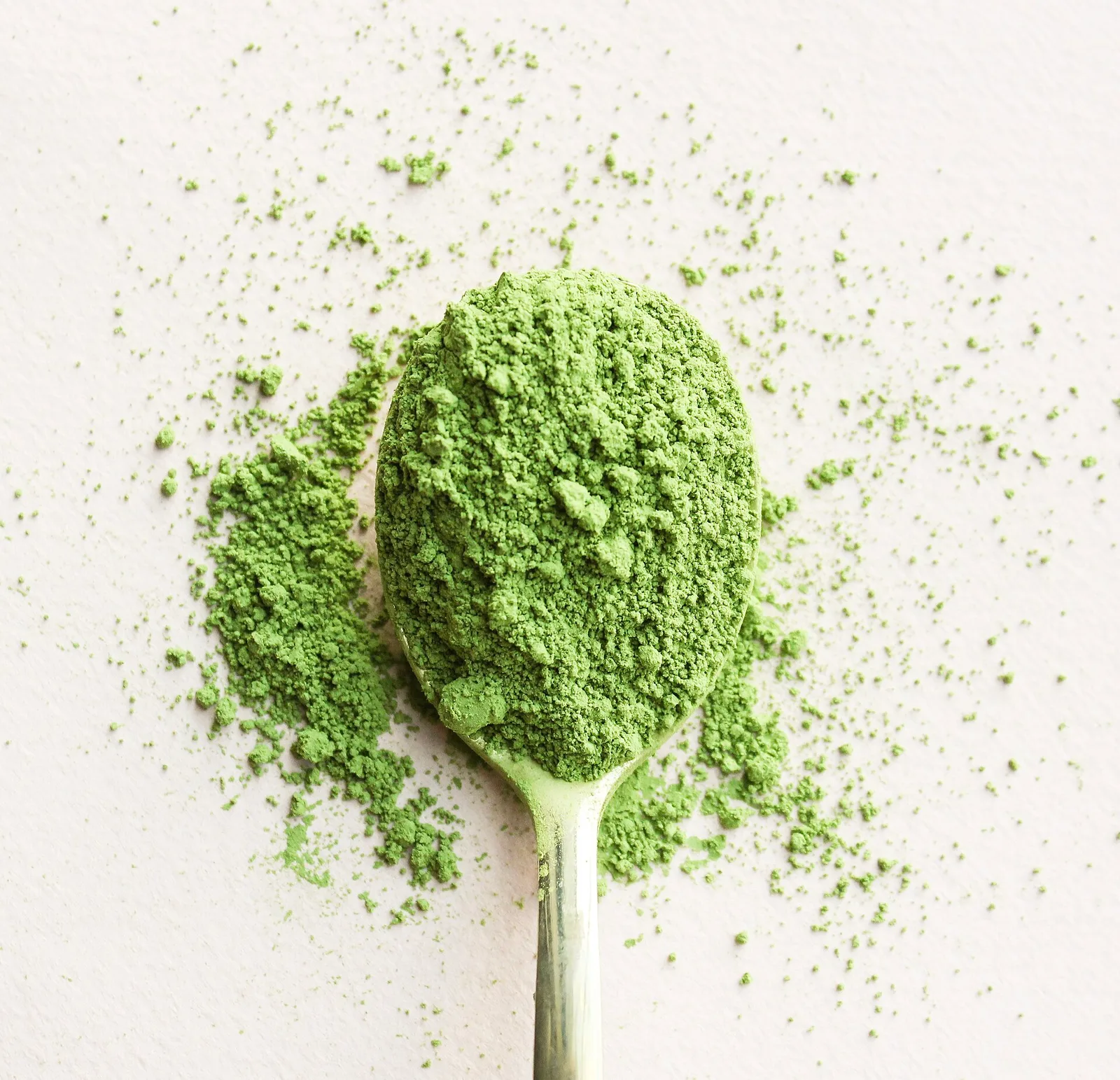
Usage in beverages
Traditionally matcha is whisked with hot water in two strengths: thick koicha, a kneaded paste of higher-grade powder, and thinner, frothed usucha. In modern cafés it is far more often combined with milk and sweetener in hot and iced lattes, blended into smoothies and milkshakes, and added to iced and tea-based drinks.
In depth
Chinese origins of whisked powdered tea
The earliest ancestors of matcha were the powdered and compressed teas of China. In the Tang dynasty, leaves were pounded and pressed into cakes, then roasted, ground, and boiled with water—and sometimes salt and other flavorings—a method described in Lu Yu's eighth-century treatise on tea. By the Song dynasty a new style had emerged in which steamed and dried leaves were ground to powder and whisked with hot water in a bowl using tools such as bowls and whisks; this drink, called mo cha, was admired enough to be the subject of writings attributed to the emperor and leading connoisseurs. The ideal was a pale, frothy cup rather than a green one. This whisked powdered tradition, however, declined in China after the founding Ming emperor banned compressed tea late in the fourteenth century, after which steeping loose leaves became the norm.[1]
Transmission to Japan by Zen monks
Powdered tea reached Japan with Buddhist monks who studied in China. The monk Eisai, who traveled to Song-dynasty China in the late twelfth century, is credited with bringing back both tea seeds and the whisked method of preparation around 1191. He set down his observations in the Kissa Yōjōki, a work framing tea as a medicine and presented to the shogunate; at this stage the tea was a dark, brownish lump rather than the bright green powder of today. Carried into the monastic life of Japanese Zen, the practice took root just as it was fading in China, and the disciples of Eisai planted some of Japan's earliest tea gardens around Kyoto, including in Uji, which became the country's foremost tea region.[2]
The rise of shade-grown tencha and Japanese refinement
What distinguishes Japanese matcha from its Chinese forerunner is shade cultivation. From roughly the fifteenth century, growers around Uji began covering tea plants for several weeks before harvest. Limiting sunlight slows the conversion of the amino acid theanine into bitter compounds and raises chlorophyll, yielding leaves with deep green color and a pronounced umami sweetness. These shaded leaves, steamed and dried without rolling, became tencha, the raw material that is stone-ground into matcha. The shift from coarse hand grinders to fine stone mills in the fourteenth century further improved texture. The same shading techniques also gave rise to other prized Japanese green teas, and during the Edo period high-grade matcha was a privilege of authorized Uji tea masters who supplied the shogun and court.[1]
Matcha in the Japanese tea ceremony
By the sixteenth century, tea masters such as Murata Jukō and Sen no Rikyū had elevated the drinking of matcha into a codified art, the way of tea, grounded in the principles of harmony, respect, purity, and tranquility and in the rustic wabi aesthetic. In the ceremony two preparations are made from the same powder: koicha, a thick, kneaded blend of higher-grade matcha and a small amount of cooler water, shared from a single bowl among guests; and usucha, a thinner tea whipped to a froth with a bamboo whisk and served individually. The powder is scooped with a bamboo spoon, whisked in a bowl, and drunk directly, often after eating a sweet so its taste lingers. Preserved through schools such as Urasenke and Omotesenke, this remains matcha's defining ceremonial role.[3]
From ceremonial bowl to flavored and milk-based drinks
Alongside its ceremonial use, matcha has long been mixed into other drinks within Japan—stirred with milk and sugar, or blended into iced beverages and confections. As whole-leaf consumption, it carries the leaf's full umami, caffeine, and amino-acid content, which suits it to creamy and sweetened formats that round off its astringency. In modern Japanese cafés it appears in matcha lattes, iced drinks, milkshakes, and smoothies, and it is added to other teas, as when it is blended with roasted-rice genmaicha. For cheaper, color-driven uses, a non-shaded powdered green tea is sometimes substituted for true shade-grown matcha in flavored drinks.[4]
Global café culture and twenty-first-century demand
Matcha entered Western markets first through Japanese grocers in cities with large Japanese communities, then gained wider attention in the early 2000s through health-food retailers. Its vivid green color made it highly photogenic on social media, and large coffeehouse chains adopted matcha lattes and iced matcha drinks, integrating the powder into mainstream café menus. The surge in international demand has strained supply: Japanese producers have reported limited availability and reduced harvests of first-flush matcha historically reserved for the tea ceremony, prompting purchase limits and discussion of sustainability. To meet demand, production has expanded beyond Japan—China, with Japanese technical guidance, began promoting mass production in Guizhou, and Vietnam also produces export matcha—though the finest grades are still associated with Japan.[1]
Part of Green Tea