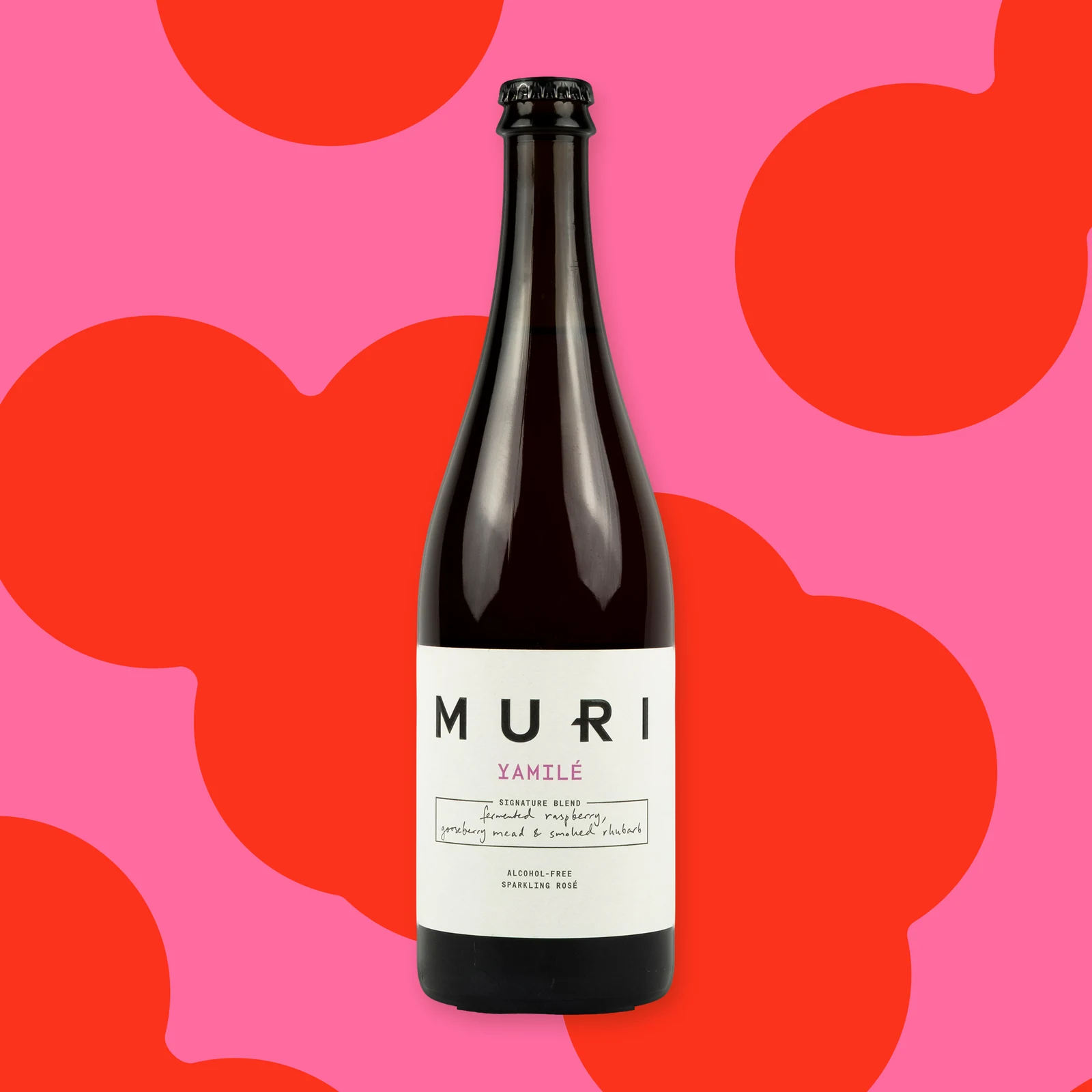


Tasting Profile
Nose. MURI describes a nose of overripe golden tomato and red fruit, opening with soft red fruit and fresh raspberry, followed by creamy smoke and delicate spice.[2],[9]
Palate. The palate is described as salty smoke with gentle raspberry acidity: dry and refreshing, with fine bubbles and a rounded texture. The overall profile is bright and tart with smoky, fruity and savoury layers, and the drink is characterised as a dry sparkling rosé mead with soft red fruit character and unexpected depth including gentle smoky, savoury and salty notes. The finish is complex and lingering, marked by pink peppercorn and aromatic botanicals.[2],[18]
Structure. Structural points stated by MURI:[2]
- Sweetness: dry
- Acidity: gentle raspberry acidity; bright and tart
- Body: rounded texture, fine bubbles
- Complexity: complex; smoky, fruity and savoury layers
- Length: lingering finish of pink peppercorn and aromatic botanicals
Pairings
MURI recommends Yamilé with cured or smoked fish, or with meats and vegetables charred on the BBQ.[9]
Composition & Vinification
MURI's ingredient declaration for Yamilé lists: water, gooseberry juice (7.5%), raspberries (5.9%), sugar, smoked rhubarb (2.8%), honey, goldenrod, angelica root, star anise, salt, pink peppercorn and yeast. MURI describes the blend as built from a gooseberry-honey mead, carbonic raspberries, lacto-fermented and smoked rhubarb, and a goldenrod and pink pepper water kefir. A June 2022 Good Drinks account names the same components and adds that the blend is finished with star anise and blanched pink peppercorns.[2],[4],[5],[6],[7],[8],[9]
Gooseberry-Honey Mead — Base. Yamilé is based on a gooseberry mead, with the honey fermented into mead using a cultivated yeast. MURI states that the honey brings roundness to the blend.[2],[10]
Carbonic-Macerated Raspberry — Fruit Core. Whole raspberries are carbonic macerated for a week, and the resulting fermented fruit is infused into the gooseberry mead base.[10]
Smoked Rhubarb -- Acidity and Smoke. The rhubarb is Svendborg Vinrabarber (Svendborg Wine Rhubarb), an old Danish heritage variety originating from Funen. It is sourced from organic grower Michael Balle in Denmark. MURI selected it for its bright, rounded acidity and says it has lower oxalic acid than many modern cultivars, giving a softer, rounder, crisp and juicy acidity. The rhubarb is cold-pressed without heating, freezing or enzymes. It is salted, lacto-fermented and then cold smoked over beechwood, with the smoking done in MURI's in-house smokery. MURI describes Yamilé as a rhubarb expression.[10],[11],[12],[13],[14],[15],[16],[17]
Goldenrod & Pink Peppercorn Water Kefir — Aromatic Layer. Goldenrod, an anise-like flowering plant that grows wild in Danish forests, is a key botanical in Yamilé and is foraged for MURI. It is combined with pink peppercorn in a water kefir. The pink peppercorns are blanched from cold seven times to remove harsh flavours, a technique MURI likens to the treatment of garlic.[4],[10]
Gooseberry Mead -- Base and Roundness. Yamilé is based on a gooseberry mead. The honey in it is fermented into a mead using a cultivated yeast. According to MURI, the honey brings roundness to the blend. The mead base is infused with the carbonically macerated raspberries.[2],[10],[16],[18]
Provenance & Sourcing
Production Philosophy
The blend takes its name from Yamilé Abad, a Peruvian oenologist and fermentation expert whom MURI describes as a friend of the company. She travelled to Copenhagen to work with MURI on a project making chicha de jora, a black corn beer. During that visit she taught the team the technique of dry carbonic maceration, which was then used in this blend, and she also helped with its early-stage experimentation. Murray Paterson has described her as the most knowledgeable person on fermentation he has ever met. MURI says the final blend reflects the characteristics of its namesake: fun, bubbly and complex.[1],[2],[3],[4]